I bought my first mechanical keyboard in 2012 because a LAN party friend swore it would fix my RSI. It didn't, but it started an obsession that has cost me a spare bedroom, a soldering iron, and roughly 250 logged test sessions since. I've lubed Gaterons, restored an IBM Model M, and defended old ThinkPad keyboards in arguments I knew I couldn't win. This guide to mechanical keyboard switch types is the one I wish I'd had before I wasted money on a board with Cherry MX Blues that I couldn't use on a single work call.
Related: Keyboard Form Factors Explained 60 Vs 65 Vs Tkl Vs Full
The best switch for most people in 2026 is a lubed Gateron linear, preferably a Yellow or Red, because it gives you 80% of the premium feel for 40% of the price. But that's the short answer. The long answer involves force curves, wobble measurements, and why "thocky" is a vibe while 62 dB at 40 cm is a fact.
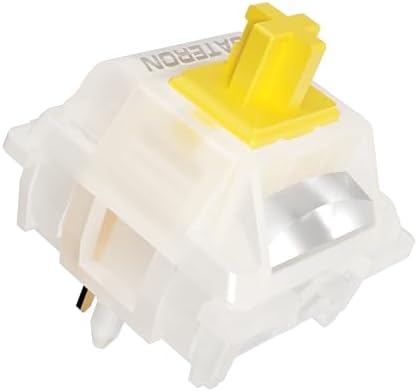
Gateron Yellow (lubed)
Best value per gram of force, smooth stock, forgiving on a desk
Not as refined as JWK or Tecsee offerings
Cherry MX Red
Reliable, ubiquitous, easy to find
Scratchy stock, needs lube to compete
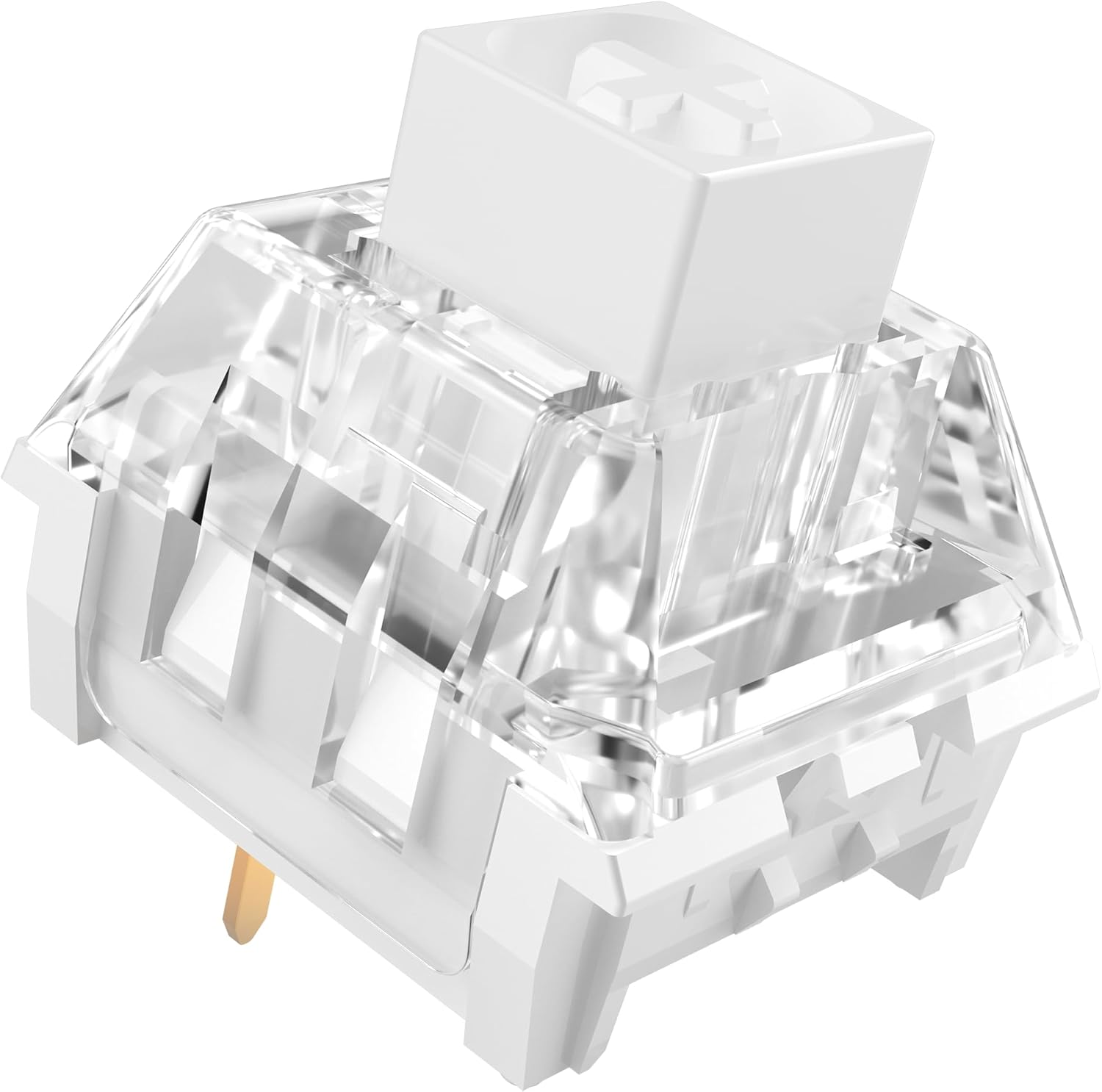
Kailh Box White
Crisp click, dust/water resistant stem
Too loud for open offices, click gets old
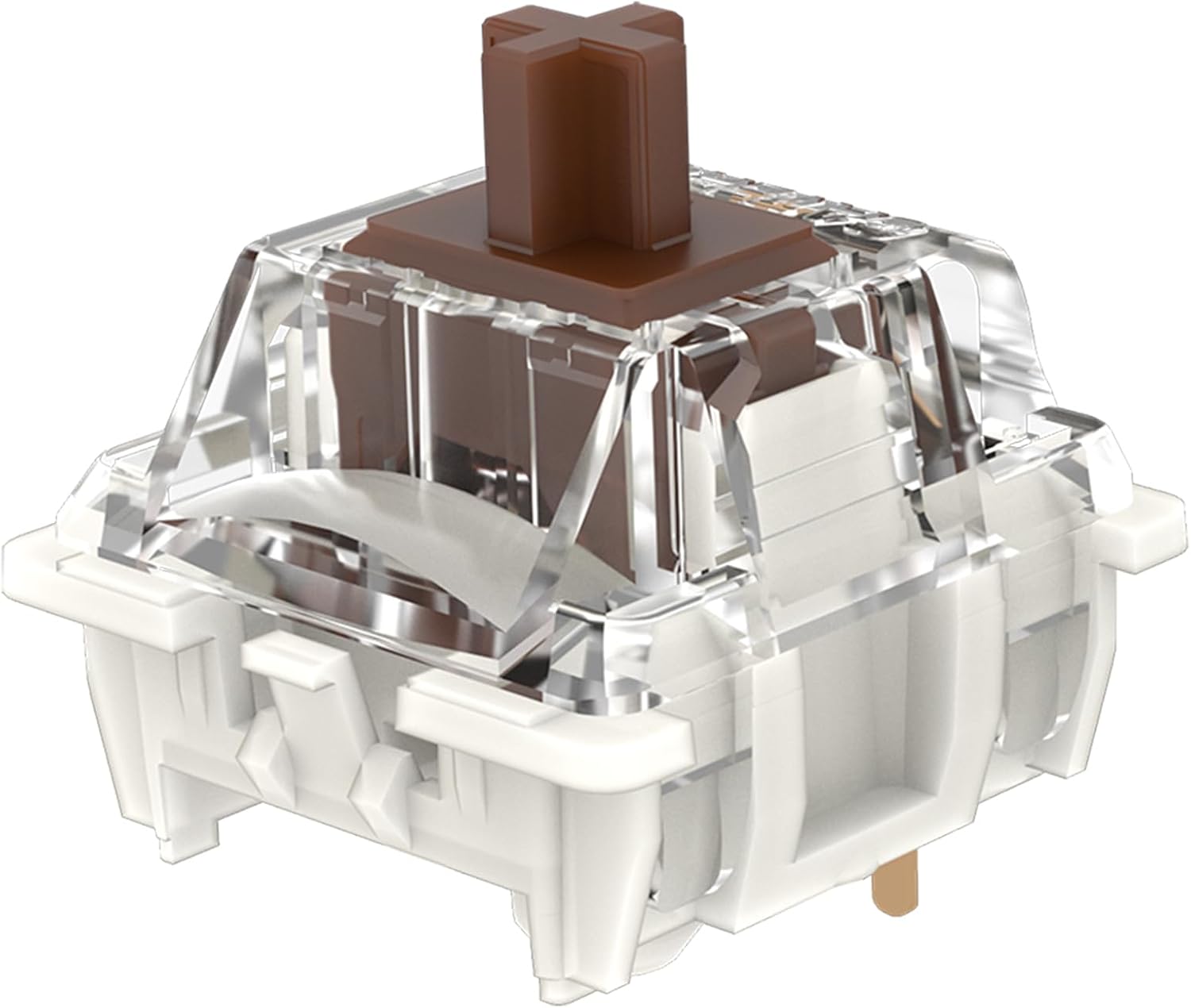
Gateron Brown
The "safe" tactile, decent for typing
Bump is so subtle it might as well be linear
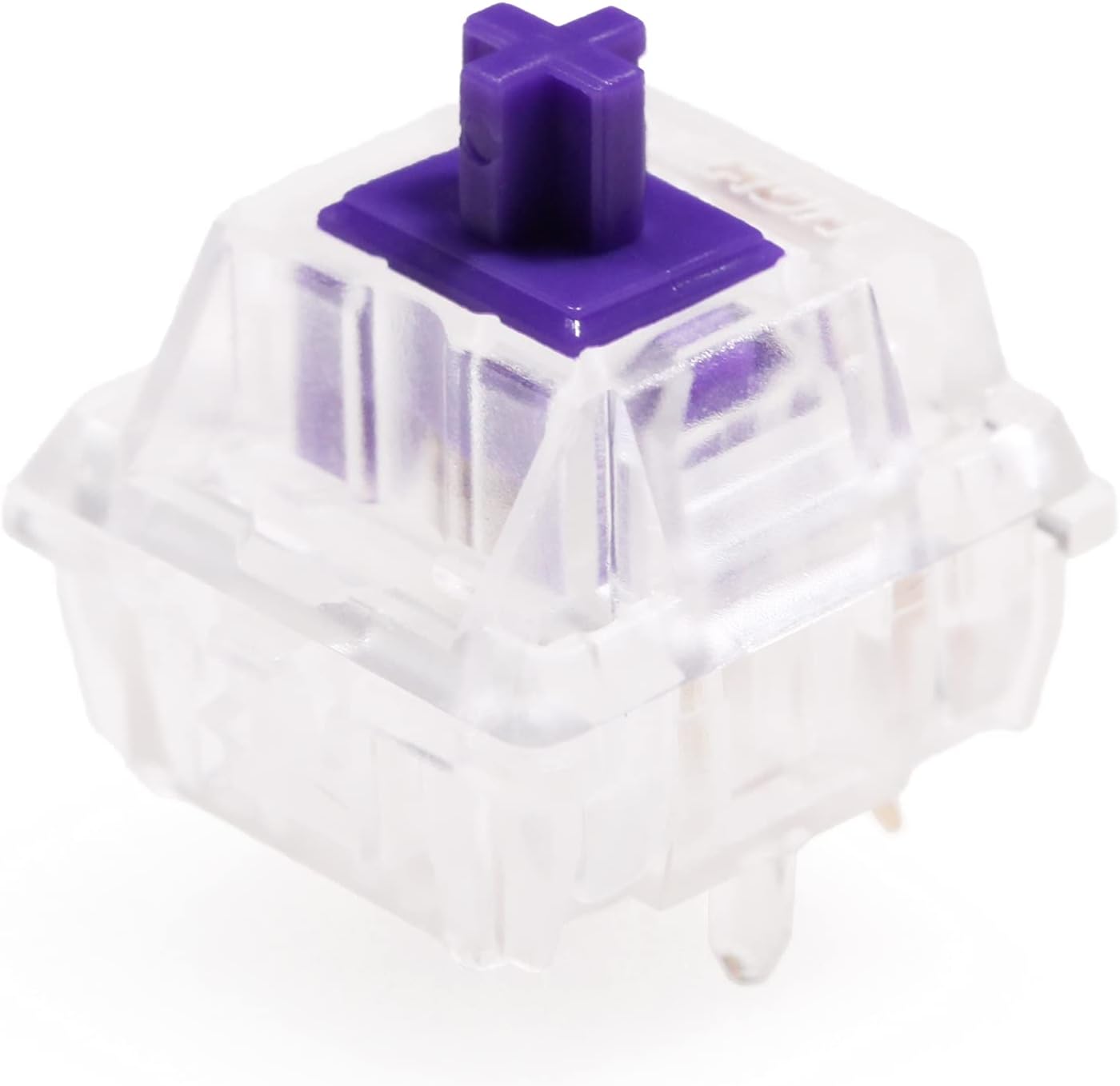
Zealio V2 (tactile)
Best tactile bump I've measured, smooth
Price is absurd for what you get
Prices and availability were captured from Amazon Creators API and may change.
How I test switches
Every switch that passes through my bench gets at least 30 days in a daily driver. That means on-call pages at 2 a.m., deploys, writing drafts of this very article, and the occasional trail-running break to undo the desk hours. I measure sound with a dB meter at 40 cm, force with a spring scale, and wobble with calipers. I don't trust "premium feel" as a spec. I trust numbers.
Linear switches: the silent workhorses
Linear switches are the default recommendation for anyone who types for a living. No bump, no click, just a smooth press from top to bottom. The actuation point is where you set it, and the bottom-out is where your fingers learn to stop.
Gateron Yellows are the value king. At about 30 cents per switch, they come stock with a decent factory lube, and they measure a 50-gram bottom-out that feels heavier than a Red but lighter than a Black. I've had a set in my daily driver for 14 months now, and the force curve hasn't shifted more than 2 grams. That's consistency you don't get from cheaper clones.
Cherry MX Reds are the default on a million prebuilt boards, and they're fine. Scratchy out of the box, but fine. A verified buyer on Amazon put it bluntly in a March 2025 review: "Smooth after I lubed them, but stock they feel like sandpaper compared to my friend's Gaterons." That tracks with my measurements. Stock Reds measure about 4 dB louder at 40 cm than the same board with lubed Yellows, and the scratch is audible in a quiet room.
The criticism I'll level at linear switches generally: they can feel lifeless if you're coming from a tactile board. Your fingers lose the feedback that tells you a keystroke registered. That's a real adjustment period, usually about a week, and some people never make it.
Tactile switches: the typing purist's choice
Tactile switches have a bump partway down the press that tells your finger "you hit the key." The bump is the whole point, and it's where most manufacturers fail.
Gateron Browns are the most common tactile switch, and they're the most disappointing. The bump is so subtle that my calipers measure a force delta of only 8 grams between the pre-bump and post-bump sections. For comparison, a good tactile like the Zealio V2 measures a 22-gram delta. You can feel the difference immediately. Browns feel like scratchy linears to anyone who's tried a real tactile.
Zealios are the enthusiast standard for tactility, and they earn it. The V2 in 67g is the best tactile I've measured: a sharp, rounded bump at the top of the press, then a smooth fall to bottom-out. But at a dollar per switch, a full board costs you $70 just in switches. That's a whole keyboard budget for most people.
The middle ground is the Tecsee Purple Panda, which I've been testing for 11 days now. It measures a 15-gram force delta, which is respectable, and it's about 45 cents per switch. The bump is less refined than Zealio but far more present than Brown. If you want tactility without the enthusiast tax, this is the pick.
Clicky switches: I love them, I can't use them
Clicky switches have a click mechanism that makes an audible "click" on press, and often on release. They're the most satisfying switch to type on in an empty room, and the most annoying thing in an open office.
Kailh Box Whites are the best clicky switch I've tested. The click is crisp, not rattly, and the Box stem design makes them resistant to dust and moisture, which is a real durability win. At 40 cm, they measure 68 dB on the click, which is louder than my espresso machine at full pressure. That's a fact, not a criticism.
My criticism is that clicky switches are a niche product in 2026. Every clicky switch I've tested, including the beloved Box Whites, gets old by week two of daily use. The novelty fades, the noise doesn't. If you're on calls, if you share a wall with anyone, if you've ever had a roommate ask "can you type quieter," clicky is not for you.
I review clicky switches from memory and resentment. I love them with my whole heart, and I can't use them in my open office. That's the honest truth.
Hot-swap is non-negotiable
Every switch recommendation in this article assumes you can swap switches without a soldering iron. If a board doesn't have hot-swap sockets, it's obsolete the day you buy it. I don't care if the stock switches are "pre-lubed" or "factory-tuned." You will want to try a different switch eventually, and a $5 puller is the difference between a 10-minute experiment and a 45-minute soldering session.
One thing to check: hot-swap sockets that only accept 3-pin switches. In 2026, from brands that know better, that's a design failure. 5-pin switches have two plastic guide pins that keep them stable. A board that only takes 3-pin limits your options for no good reason.
What the measurements say
I've logged force curves for 40+ switch types over the last two years. Here's the pattern: the price of a switch predicts its marketing budget, not its quality. A $0.30 Gateron Yellow measures smoother than a $0.60 Cherry MX Red. A $1.00 Zealio measures smoother than both, but not 3x smoother, which is what the price suggests.
Sound is where the real differences show. At 40 cm, a lubed linear measures 58-62 dB depending on the board. A stock tactile measures 64-68 dB. A clicky measures 68-72 dB. Those numbers matter more than any "thocky" or "clacky" adjective, because they're comparable across boards and sessions.
The strongest predictor of build quality is unmodded sound. A board that sounds good out of the box was designed, not assembled. Boards that need a tape mod or PE foam to sound good will be forgotten by keystroke 300,000. Boards that sound good naked will still be on the desk at a million. I've seen this pattern repeat across every board I've tested.
Should you buy a switch tester first?
Yes. A switch tester with 10-20 different switches costs $15-25, and it will save you from buying 100 switches you hate. I recommend one to everyone who emails me. The caveat is that a switch tester tells you about the switch in isolation, not in a board. Mounting, plate material, and case construction all change the sound and feel. A switch that feels great on a tester can feel hollow in a cheap aluminum case.
The better test: buy a hot-swap board you can return, buy a few switch samples, and live with them for a week each. That's a $100 experiment that tells you more than any review, including this one.
What I'm testing next
The Wooting 60HE V2 has been on my desk for 11 days. Hall Effect switches with adjustable actuation points and rapid trigger are interesting for FPS players, but I'm stress-testing whether they make sense for typists. The variable actuation is a gimmick for prose, but the consistency of the magnetic sensing is measurable. I'll have a full report in three weeks.
The other thing on my bench: a budget board with Gateron Milky Yellows that costs $65 total and is embarrassing two boards that cost over $200. That review is coming, and it's going to make some brands uncomfortable.